 In
May 1923 the so-called “Pan-Orthodox Congress” of the orthodox Christian
Churches was held in Istanbul (Constantinople) that was chaired by the patriarch
Meletius IV.
In
May 1923 the so-called “Pan-Orthodox Congress” of the orthodox Christian
Churches was held in Istanbul (Constantinople) that was chaired by the patriarch
Meletius IV.When Pope Gregory XIII issued the papal bull Inter gravissimas on 25 February 1582, in which he urged all Christians to adopt the reformed calendar and the improved Easter reckoning, he also hoped that the Orthodox Christians would accept it. However, despite the efforts of the emissaries of the Pope to convince the Orthodox Church to accept the new calendar, it was rejected by the Orthodox Church. The main reason for its rejection was that the celebration of Easter would be altered: contrary to the injunctions of canon 7 of the Holy Apostles, the decree of the First Ecumenical Synod (Nicaea, 325), and canon 1 of Ancyra, Easter would sometimes coincide with the Jewish Passover in the Gregorian calendar.
In May of 1923, however, an “Inter-Orthodox Congress” was convened at Constantinople by the then Ecumenical Patriarch, Meletios IV. Not all Orthodox Churches were in attendance. The Churches of Serbia, Romania, Greece, and Cyprus were; the Churches of Alexandria, Antioch and Jerusalem, although invited, were not; the Church of Bulgaria was not invited. Several issues were under discussion at the congress, one of which was the adoption of the New Calendar. No unanimous agreement was reached on any of the issues discussed.
In
May 1923 the so-called “Pan-Orthodox Congress” of the orthodox Christian
Churches was held in Istanbul (Constantinople) that was chaired by the patriarch
Meletius IV.
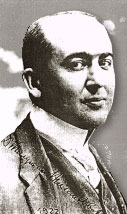
Milutin Milankovitch (1879-1958), a Serbian scientist who is now best remembered for his astronomical studies on the Ice Ages.
It was adopted by Pan Orthodox Congress, not by Greek Orthodox Church. Congress was held in Constantinople in 1923. Ecumenical Patriarchate organized the Congress, and Serbian and Rumanian Orthodox Churches participated, and Ecumenical Patriarchate. There was one delegation which pretended to represent Russian Orthodox Church, but in fact it did not - the confusion arose due to the the difficult situation in Russia following the Bolsjevik revolution.
The Greek Orthodox Church, in Athens, adopted Gregorian calendar in 1924, as well as in Rumanian. But they did not adopt the Gregorian epacts – Easter is calculated according to the Julian epacts. Do not mix Ecumenical Patriarchate with Greek Orthodox Church, it is not the same. All Churches which took part in Constantinople are independent.
One of the points discussed during this congress was the revision of the Julian calendar and the calculation of Easter and the other movable feast days.
At the conclusion of the congress, the following resolutions were issued:
With the modified leap year rule, the Reformed Orthodox Calendar is even more accurate than the Gregorian Reform. As 900 years contain (9 × 25) – 7 = 218 leap days, the average length of the calendar year is 365 218/900 = 365.242222.... days or exactly 365 days 5 hours 48 minutes 48 seconds.
In March 1997 delegates from the World Council of Churches and the Middle East Council of Churches convened in Aleppo (Syria) to discuss the problem of the current Western and Orthodox calculations.
??? in favour of astronomical prediction: the Sunday following the Jerusalem meridian day of the first astronomical Full Moon after the astronomical March Equinox. Jerusalem meridian time is 2 hours and 21 minutes ahead of Greenwich. Read more about this in the World Council of Churches article that is the source of this information.
The following table lists all cases between 1900 and 2200 when the date of astronomical Easter Sunday differs from that calculated by the Gregorian Easter rules. The times for the spring equinox and the astronomical Full Moon are based on the meridian of Jerusalem, which was adopted to be 35º 13' (2h 20.9m) East of Greenwich.
| Year | Spring Equinox | Astronomical Full Moon | Easter Sunday | Jewish
Passover (Nisan 15) |
||||
| Date | h m | Date | h m | Weekday | Astron. | Gregor. | ||
| 1900 | March 21 | 04 00 | April 15 | 03 23 | Sunday | April 22 | April 15 | April 14 |
| 1903 | March 21 | 21 36 | April 12 | 02 39 | Sunday | April 19 | April 12 | April 12 |
| 1923 | March 21 | 17 50 | April 1 | 15 31 | Sunday | April 8 | April 1 | April 1 |
| 1924 | March 20 | 23 42 | March 21 | 06 51 | Friday | March 23 | April 20 | April 19 |
| 1927 | March 21 | 17 20 | April 17 | 05 56 | Sunday | April 24 | April 17 | April 17 |
| 1943 | March 21 | 14 24 | March 22 | 00 29 | Monday | March 28 | April 25 | April 20 |
| 1954 | March 21 | 06 14 | April 18 | 08 10 | Sunday | April 25 | April 18 | April 18 |
| 1962 | March 21 | 04 50 | March 21 | 10 16 | Wednesday | March 25 | April 22 | April 19 |
| 1967 | March 21 | 09 58 | March 26 | 05 42 | Sunday | April 2 | March 26 | April 25 |
| 1974 | March 21 | 02 27 | April 6 | 23 22 | Saturday | April 7 | April 14 | April 7 |
| 1981 | March 20 | 19 24 | April 19 | 10 19 | Sunday | April 26 | April 19 | April 19 |
| 1998 | March 20 | 22 15 | April 12 | 00 44 | Sunday | April 19 | April 12 | April 11 |
| 2019 | March 21 | 00 19 | March 21 | 04 03 | Thursday | March 24 | April 21 | April 20 |
| 2038 | March 20 | 15 01 | March 21 | 04 30 | Sunday | March 28 | April 25 | April 20 |
| 2045 | March 20 | 07 28 | April 1 | 21 04 | Saturday | April 2 | April 9 | April 2 |
| 2049 | March 20 | 06 49 | April 18 | 03 26 | Sunday | April 25 | April 18 | April 17 |
| 2057 | March 20 | 05 29 | March 21 | 03 05 | Wednesday | March 25 | April 22 | April 19 |
| 2069 | March 20 | 03 06 | April 6 | 18 35 | Saturday | April 7 | April 14 | April 6 |
| 2076 | March 19 | 20 00 | March 20 | 18 58 | Friday | March 22 | April 19 | April 18 |
| 2089 | March 19 | 23 28 | March 26 | 11 42 | Saturday | March 27 | April 3 | March 26 |
| 2095 | March 20 | 10 37 | March 21 | 03 31 | Monday | March 27 | April 24 | April 19 |
| 2096 | March 19 | 16 24 | April 7 | 20 39 | Saturday | April 8 | April 15 | April 7 |
| 2106 | March 21 | 02 26 | April 18 | 10 43 | Sunday | April 25 | April 18 | April 20 |
| 2114 | March 21 | 01 01 | March 21 | 11 38 | Wednesday | March 25 | April 22 | April 21 |
| 2119 | March 21 | 06 01 | March 27 | 02 19 | Monday | April 2 | March 26 | April 25 |
| 2120 | March 20 | 11 50 | April 14 | 00 43 | Sunday | April 21 | April 14 | April 13 |
| 2133 | March 20 | 15 37 | March 21 | 02 41 | Saturday | March 22 | April 19 | April 21 |
| 2143 | March 21 | 01 33 | March 31 | 01 23 | Sunday | April 7 | March 31 | March 31 |
| 2147 | March 21 | 00 54 | April 16 | 05 33 | Sunday | April 23 | April 16 | April 15 |
| 2150 | March 20 | 18 24 | April 12 | 02 37 | Sunday | April 19 | April 12 | April 12 |
| 2152 | March 20 | 06 00 | March 21 | 00 47 | Tuesday | March 26 | April 23 | April 20 |
| 2170 | March 20 | 14 50 | April 1 | 09 01 | Sunday | April 8 | April 1 | April 1 |
| 2171 | March 20 | 20 31 | March 22 | 01 20 | Friday | March 24 | April 21 | April 20 |
| 2174 | March 20 | 13 50 | April 17 | 09 25 | Sunday | April 24 | April 17 | April 16 |
| 2190 | March 20 | 11 07 | March 21 | 22 56 | Sunday | March 28 | April 25 | April 20 |
Occasionally, the date of astronomical Easter Sunday will fall outside the traditional Easter Sunday limits (22 March to 25 April) and can occur on dates such as 21 March (not until in 2877) and 26 April (in 1829, 1981, 2201, 2353, 2725, etc.).

