With the ever-increasing speed of travel and communication during the 19th century, the concept of a calendrical date line also found its way outside the domain of astronomers, geographers and navigators.
Already in 1841, the American writer Edgar Allan Poe (1809-1849) made use of the calendrical paradox of the date line in his short story “Three Sundays in a Week” (first published as “A Succession of Sundays” in The Philadelphia Saturday Evening Post for 27 November 1841) in which a wealthy man promises the hand (and the ‘plum’) of his niece with a sizeable dowry to a relative, on the condition that a marriage could only be possible if it occurred “when three Sundays come together in a week”.
However, this seemingly impossible condition was satisfied several weeks later when the parties concerned were visited on a Sunday by two navy captains, each whom had just completed a circumnavigation of the world. The first, who had travelled in eastward direction, argued that it was Monday and that the previous day had been a Sunday. The second, having travelled in westward direction, countered that it was a Saturday and that Sunday would not be until the next day.
Another American writer who used the motif of the date line was Francis Bret Harte (1836-1902) in his poem “The Lost Galleon” (published in 1867 in The Lost Galleon and Other Tales and quoted in part at the introduction of this web site).
Harte’s poem tells the story of how the Spanish galleon San Gregorio, sailing in 1641 from Acapulco Bay to Manila, was doomed to hover near the date line for nearly three centuries attempting in vain to make up for the day that they had lost when they inadvertently crossed the date line at the begin of St. Gregory’s day (9 May), the feast day of the ship’s patron saint. Unfortunately, Harte made an historical error in assuming that the date line was then located between Acapulco Bay and Manila: this was true in his time but not in the 17th century.
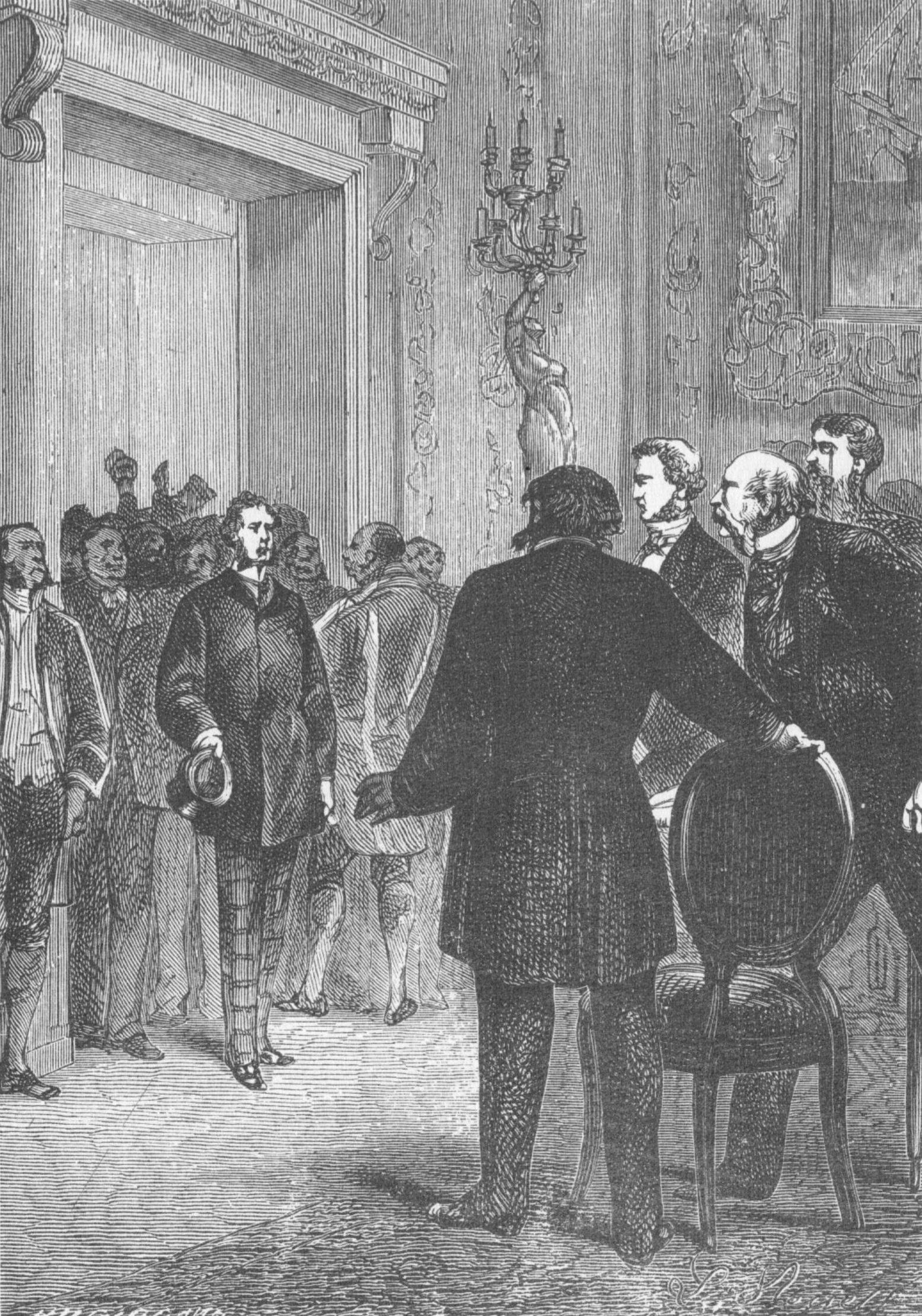
Probably the best-known literary work involving the date line is the adventure story Le Tour du Monde en Quatre-Vingts Jours, published in 1873 by the French writer Jules Verne (1828-1905).
The climax of Verne’s story occurs at the moment when the always punctual Phileas Fogg, who had placed a wager with the members of the London Reform Club that he would complete a journey around the world within 80 days, just in time realized that his eastward itinerary had gained him a whole day so that he was still able to be back in the Reform Club in time.

